



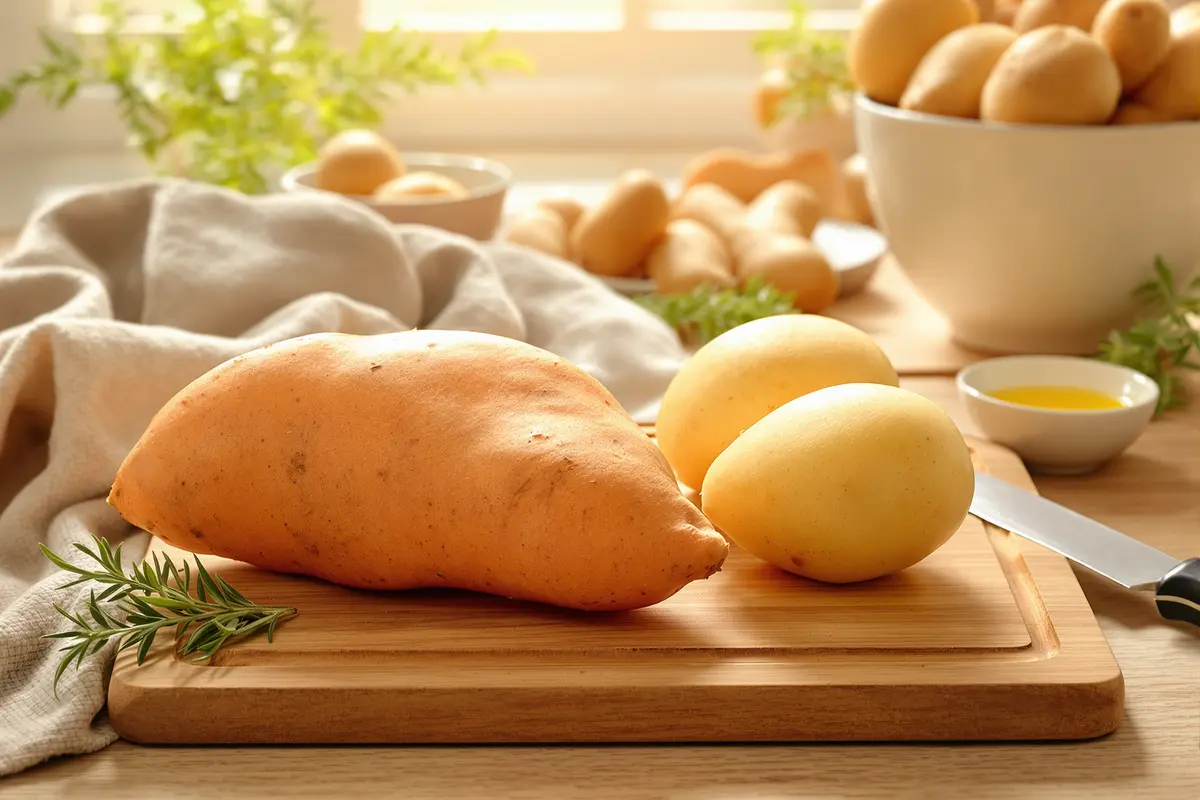
They might sit next to each other on your dinner plate, but sweet potatoes and regular potatoes are hiding a secret. Beneath the surface, they’re as different as night and day—and science has the receipts. Whether you’re avoiding nightshades, curious about nutrition, or just love a good baked spud, the truth behind these two “potatoes” might surprise you.
Not Even Botanically Related
Let’s start with a shocker: sweet potatoes and regular potatoes aren’t even in the same plant family. They might both grow underground, taste great roasted, and show up in comfort food classics—but genetically, they’re distant cousins at best.
- Regular potatoes (Solanum tuberosum) belong to the nightshade family (Solanaceae), alongside tomatoes, eggplants, and peppers.
- Sweet potatoes (Ipomoea batatas) come from the morning glory family (Convolvulaceae), related to the climbing flowers on porches and fences.
That’s not just a name game. When scientists sequenced their DNA, it showed these two split from a common ancestor tens of millions of years ago. Their similarities—edible underground parts, starchy textures—are just a coincidence of evolution.
Different Below the Surface
The part we eat hides another big difference. Regular potatoes grow as tubers. Sweet potatoes don’t.
- Regular potatoes: These are swollen stems. The “eyes” are growth points. Cut a tuber into pieces and each one can grow into a new plant.
- Sweet potatoes: These are storage roots. No eyes, no sprouting from chunks. They grow from slips—rooted vine segments.
So even the “potato” part of sweet potatoes isn’t a potato at all.
Poison Warnings and Sweet Surprises
This botanical divide also carries health differences. The nightshade family has a dark side, and regular potatoes aren’t exempt.
- Nightshades like regular potatoes can produce alkaloids, chemical compounds that become toxic in high amounts.
- When white potatoes turn green, that means they’re producing chlorophyll—and often toxins like solanine.
Have you ever tasted a bitter greenish part of a sprouting potato? That’s nature’s warning—don’t eat this. Sweet potatoes don’t do this. They come from a different family with a different defense system. That’s why many people who avoid nightshades for health reasons still eat sweet potatoes safely.
What About Yams?
If you’re even more confused now, just wait—there’s another twist.
In many North American stores, sweet potatoes are labeled as “yams”. But true yams are an entirely different species, part of the Dioscoreaceae family. They’re more closely related to grasses and lilies than to either potato type.
In your grocery basket, you might have:
- Potatoes: nightshade tubers
- Sweet potatoes: morning glory storage roots
- “Yams”: mislabeled sweet potatoes
- True yams (if you find them): completely unrelated monocots
Let’s Talk Nutrition and Taste
Both sweet and regular potatoes offer nutritional benefits—but in different ways.
| Feature | Regular Potato | Sweet Potato |
|---|---|---|
| Plant Family | Nightshade (Solanaceae) | Morning Glory (Convolvulaceae) |
| Edible Part | Tuber (swollen stem) | Storage root |
| Typical Flavor | Mild, earthy | Sweet, caramel-like |
| Starch Type | Highly digestible starch | More complex carbs, more fiber |
| Color & Antioxidants | Pale or purple (anthocyanins) | Orange (beta-carotene), or purple |
Roast a white potato and you’ll get crisp edges and a fluffy middle. Roast a sweet potato? You’ll smell sugar, feel stickiness, and bite into tender sweetness. It’s flavor science in action.
Grown Worlds Apart
Even their farming roots tell different tales.
- Regular potatoes: Originally from the Andes, they thrived in cold climates. Indigenous growers learned how to manage their toxins and preserve them for long winters.
- Sweet potatoes: Likely from Central or South America, they also spread across the Pacific. Before Europeans arrived, sweet potatoes reached Polynesia and Asia through ancient trade routes.
One crop loves cool mountains. The other craves warm sun. Yet both became comfort foods worldwide.
What Happens If You Grow Them
If you plant them side by side, their differences become unmistakable:
- Potato plants: Grow in upright bushes. Flowers are small and star-shaped. Underground, the tubers form like knobby stones.
- Sweet potato plants: Sprawl as low vines. Their leaves are heart-shaped. The storage roots are long and tapered, more like carrots than balls.
Watch the garden, and you’ll see evolution unfold. These aren’t just different vegetables—they’re different worlds.
Why It All Matters
This isn’t just plant trivia. Knowing the difference between sweet potatoes and regular potatoes teaches a broader lesson—our categories often simplify nature to make life easier. But real understanding comes from looking closer.
When you notice that sweet potatoes grow like vines and potatoes grow like shrubs, that they store sugars differently, that one has toxic relatives while the other doesn’t—that’s when you start seeing the hidden complexity of your food. It’s more than taste. It’s history, evolution, and chemistry on your plate.
Final Thoughts
So next time you grab a potato—or sweet potato—you’ll know you’re not just choosing a side dish. You’re picking between two totally different plants, carrying stories written in DNA, migration, and millions of years of change. That makes every bite a little more meaningful, doesn’t it?










Leave a comment