


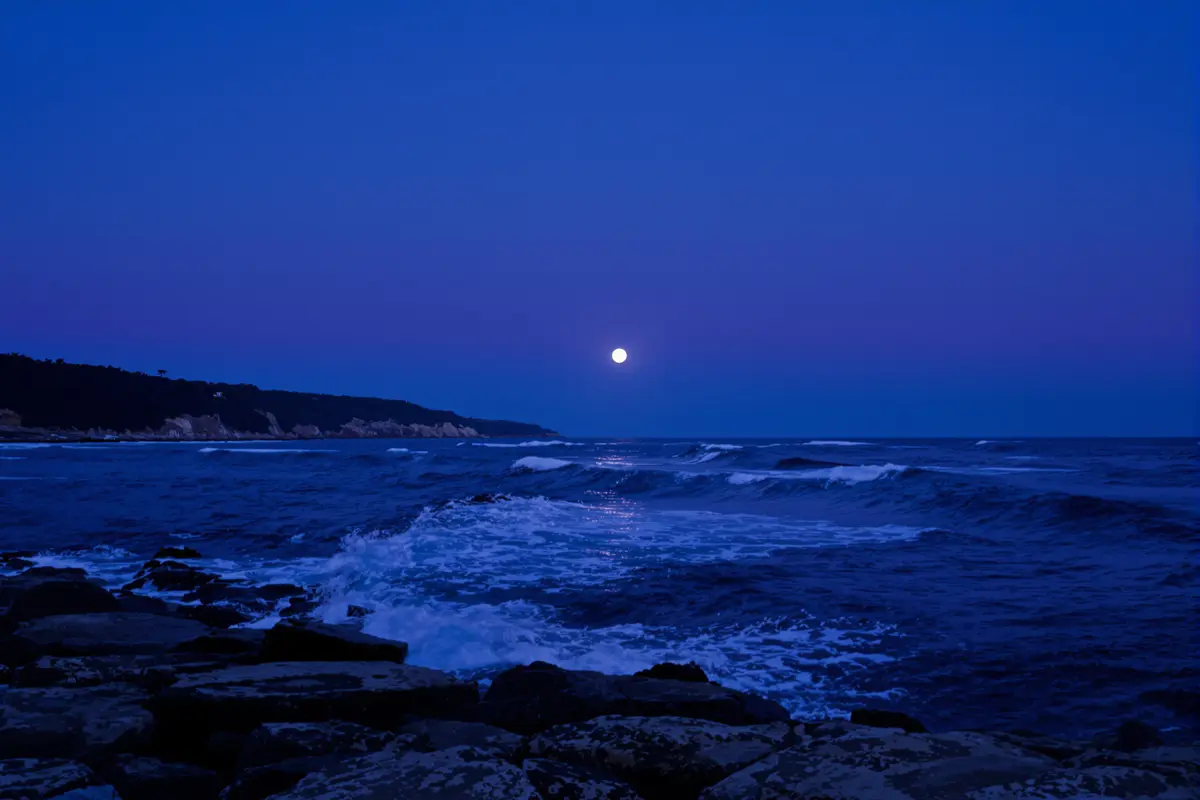
Look up at the Moon tonight. It might seem peaceful and still, hanging quietly in the sky. But something surprising is happening—the Moon is slowly drifting away from Earth. You can’t see it. You can’t feel it. Yet this small movement is secretly changing your days, your tides, and even the shape of our planet’s future.
The Moon is on the move
Every year, the Moon moves about 3.8 centimeters farther from Earth. That’s about the same pace your fingernails grow. Scientists discovered this by shooting laser beams at reflectors left on the Moon by Apollo astronauts. By timing how quickly the light returns, they can measure the Moon’s position down to the millimeter.
That tiny drift matters. As the Moon pulls away, it causes Earth’s spin to slow down. This means our days—yes, the 24-hour days we live by—are getting slightly longer. Not by much. Just a few milliseconds every century. But over millions of years, those seconds add up.
Rewinding time: when days were shorter
If we could travel back in time 1.4 billion years, a full day would last only about 18 hours. The Moon would fill a larger slice of the sky, and the tides would be much stronger, crashing across vast shallow seas that once covered much of Earth’s land.
How do we know this? The secret lies in ancient corals and rocks. Fossil corals have tiny rings, like tree trunks, that show how many days fit into a year. The more rings, the shorter the days. These old coral clocks let scientists peek into Earth’s deep history and watch the rhythm of time change.
Tidal friction: the Moon’s slow tug-of-war
This change isn’t magic. It’s physics. The reason the Moon is drifting and Earth’s spin is slowing is because of something called tidal friction.
The Moon’s gravity pulls on our oceans, creating bulges of water. But Earth spins faster than the Moon orbits. So these bulges get dragged slightly ahead of the Moon. That extra tug gives the Moon a gentle push, sending it into a wider orbit. At the same time, Earth loses a tiny bit of spin energy—and our days stretch, bit by bit.
The tides are getting softer
The Moon is the main force behind Earth’s ocean tides. As the Moon moves away, that pull gets a bit weaker. The result? Tides become a little less extreme. The difference between high and low tides slowly shrinks, especially over many generations.
Right now, that change is too small to notice. But over tens or hundreds of millions of years, it reshapes what coastlines feel like. Take the Bay of Fundy in Canada—it has some of the highest tides on Earth, swinging over 15 meters in a single day. But in the distant future, the bay might lose some of that drama as the Moon’s grip weakens and the land reshapes.
Why tides matter more than you think
Tides aren’t just pretty to watch. They stir the oceans, move nutrients, and shape where plants and animals live along the coasts. Stronger tides in Earth’s past may have helped early sea life by mixing water better and spreading oxygen and food.
As tides weaken, some shallow sea areas may trap more sediment. Certain wetlands could shrink or appear elsewhere depending on how the oceans, land, and tides find balance. It’s like a slowly shifting puzzle that keeps changing the rules of life along the shore.
How we track this cosmic drift
To track the Moon’s movement, scientists use lunar laser ranging. They bounce laser beams off special mirrors on the Moon and time how long the light takes to return. This tells them the Moon’s distance, to micro precision.
They also study ancient rock layers and fossil corals, combining today’s tech with nature’s old records. The big picture shows a steady pattern of change: longer days, a drifting Moon, and softer tides.
So what does this all really mean?
Will the Moon float away? Not anytime that matters to us. The drift slows down over time. And long before the Moon escapes Earth’s side, the Sun will evolve and change the whole system.
- The Moon drifts away: about 3.8 cm per year
- Earth’s spin slows: adding milliseconds to each day over centuries
- Tides soften: tidal ranges slowly shrink over millions of years
You won’t notice it day to day. Your beach vacation next summer won’t look any different. But these tiny shifts are building a different world—just very slowly.
A quiet clock in the sky
The Moon isn’t just a pretty light at night. It’s like a cosmic timekeeper. What it’s doing—softly pulling, drifting, tuning the length of days—connects today with billions of years of Earth’s history.
Next time you stand by the sea and watch the tide slip in, consider this: the Moon you see is not exactly the one your ancestors saw. And it’s not quite the one your great-grandchildren will see either. Yet all of us are linked by its quiet, endless motion.







Leave a comment